
Kitchari: The Healing Ayurvedic Dish That Balances Body, Mind & Digestion
- Emma Herbert
- Aug 3, 2025
- 4 min read
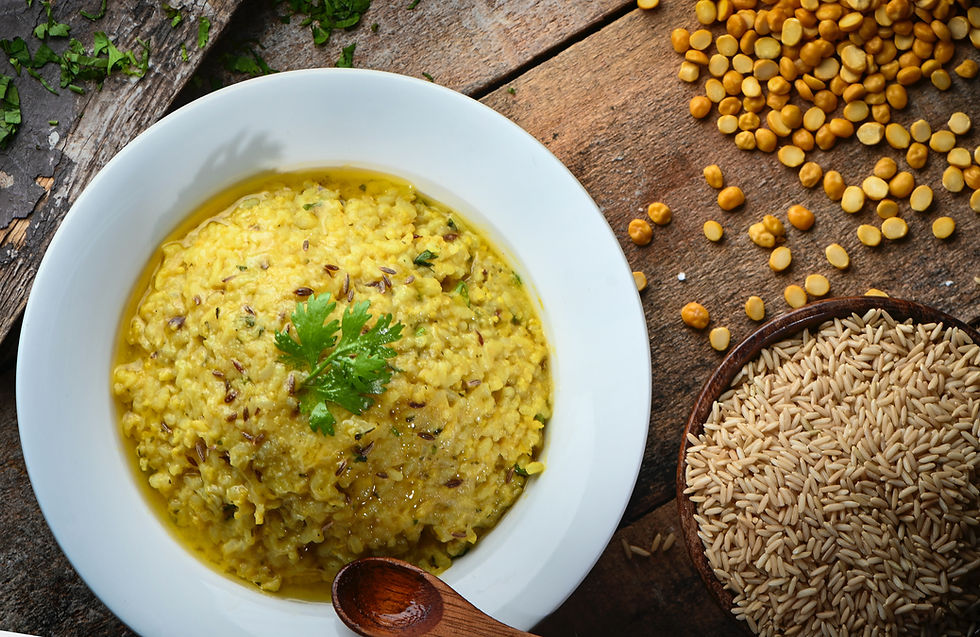
Kitchari (also spelled khichdi) is more than just a meal—it’s medicine, nourishment, and ritual all in one. Revered in Ayurveda for thousands of years, this simple yet powerful dish supports detoxification, digestive reset, and deep cellular nourishment. Whether you're navigating seasonal transitions, recovering from illness, or embarking on a cleanse, kitchari offers a grounding return to balance.
The Origins of Kitchari
The word kitchari comes from the Sanskrit khicca, meaning a mixture—typically of rice and lentils. Traced back over 5,000 years to ancient Vedic texts, kitchari has long been a staple in Indian kitchens and Ayurvedic healing protocols. Its humble simplicity masks its potent healing power.
In India, khichdi is often the first food introduced to babies because of its soft texture and easy digestibility. It’s also commonly served to the elderly or those recovering from illness, as well as during spiritual fasting or Panchakarma—the classical Ayurvedic detoxification therapy.
When is Kitchari Used in Ayurveda?
Kitchari is used:
During a cleanse or reset (especially seasonal transitions like autumn or spring)
To restore digestive fire (agni) after illness, travel, or overindulgence
For fasting with nourishment—unlike water or juice fasts, a kitchari cleanse provides grounding nutrients
Postpartum to rebuild strength and nourish tissues
As a mono-diet to simplify digestion and promote detoxification
Because it’s a mono-meal (the same ingredients eaten over multiple meals), it gives the digestive system a rest, allowing the body to focus on repair and elimination.
The Digestive Benefits of Kitchari
From an Ayurvedic lens, all disease begins in the gut. When digestion is compromised—through irregular eating, stress, incompatible food combinations, or processed foods—ama (toxins) accumulate. Kitchari helps to reverse this by stoking agni (digestive fire), clearing toxins, and supporting gentle elimination.
Key digestive benefits of kitchari:
Easily digestible: The combination of split mung dal and white basmati rice is light and gentle on the stomach.
Tridoshic: With the right spices and vegetables, kitchari can balance all three doshas—Vata, Pitta, and Kapha.
Heals the gut lining: The soft, soupy texture is soothing and nourishing for the intestinal walls.
Builds ojas: The subtle essence of vitality and immunity in Ayurveda.
Regulates elimination: High in fibre, but not overly rough on the digestive tract.

Why These Ingredients? The Wisdom Behind Kitchari
Every ingredient in kitchari is chosen for its healing qualities:
1. White Basmati Rice
Light, easy to digest, and not too heavy like brown rice.
Nourishes without taxing agni.
Supports a grounding effect, especially for Vata and Pitta.
2. Split Yellow Mung Dal
The only lentil considered tridoshic.
High in protein but very easy to digest.
Does not produce gas like other legumes.
3. Ghee (Clarified Butter)
Lubricates tissues, supports detoxification through the lymph, nourishes ojas.
Carries the medicinal qualities of the spices deep into the tissues.
4. Spices
Spices are not just for flavour—they’re the medicine in the meal. Here's why each is typically used:
Spice | Why It's Used |
Cumin | Stimulates digestion, reduces bloating |
Mustard Seeds | Support bile flow and digestion of fats |
Coriander | Cooling, good for Pitta, supports detoxification |
Fennel | Sweet and cooling, eases bloating and cramping |
Turmeric | Anti-inflammatory, purifies the blood and liver |
Ginger | Warming, kindles agni, supports circulation |
Asafoetida (Hing) | Reduces gas, supports digestion—especially useful for Vata |
You can adjust the spices based on your dosha or season—warming spices for Vata/Kapha, cooling ones for Pitta.

Kitchari Recipe
Here’s a simple, traditional kitchari recipe you can use for a cleanse or a nourishing reset.
Ingredients (Serves 2–3)
½ cup split yellow mung dal (soaked 2–4 hours, then rinsed well)
½ cup white basmati rice (rinsed)
1 tbsp ghee
½ tsp cumin seeds
½ tsp mustard seeds
½ tsp fennel seeds
1 tsp ground coriander
½ tsp turmeric
1 small knob fresh ginger (grated)
Pinch of asafoetida (optional)
1 carrot, chopped
1 zucchini, chopped
A few green beans or leafy greens
4–5 cups filtered water (more for a soupier consistency)
Salt to taste
Fresh coriander or a squeeze of lime (optional, to garnish)
Cooking Instructions
Warm the ghee in a heavy-bottomed pot over medium heat. Add mustard seeds and cumin seeds. Let them pop.
Add fennel, turmeric, coriander, asafoetida, and ginger. Stir for 30 seconds until aromatic.
Add mung dal and rice, stirring to coat with the spices.
Add the chopped vegetables and water.
Bring to a boil, then reduce heat and simmer uncovered for 30–45 minutes, or until soft. Stir occasionally and add water if it thickens too much.
Season with salt to taste.
Garnish with chopped coriander, a dollop of ghee, or a squeeze of lime if desired.
How to Use Kitchari During a Cleanse
Many Ayurvedic cleanses use kitchari as the main meal, eaten for breakfast, lunch, and dinner over a certain amount of days. The simplicity of the diet allows the body to detox gently without feeling deprived or depleted.
During a cleanse:
Drink hot water or herbal teas between meals
Avoid caffeine, sugar, processed foods, and snacks
Slow down, rest, and reflect
Support elimination with gentle practices like self abhyanga massage, tongue scraping, or sweating (hot shows, steam rooms or saunas)
Kitchari can also be eaten once a day outside of a cleanse to restore balance during times of stress, after travel, or when digestion feels “off.”

Adapting Kitchari to Your Needs
Kitchari is wonderfully adaptable:
Constitution | Adjustments |
Vata | Add extra ghee, root veggies, warming spices like ginger and cinnamon |
Pitta | Use cooling spices like fennel and coriander, skip the mustard seeds and garlic |
Kapha | Use less ghee, add bitter greens, increase ginger, turmeric, and mustard seeds |
Final Thoughts
Kitchari is more than a meal—it’s a return to simplicity, rhythm, and inner wisdom. In a world that’s constantly rushing and over-consuming, kitchari reminds us that healing can be found in slowing down, nourishing ourselves deeply, and trusting in the intelligence of nature.
Whether you're doing a seasonal cleanse, supporting your digestion, or just craving comfort food with purpose, kitchari is a bowl of balanced medicine you can return to again and again.
Looking to go deeper? If you’re curious about how to use kitchari in a guided Ayurvedic reset, explore my Seasonal Reset Cleanse, the Reclaim Your Vitality program or Lifestyle Alchemy for Weight Loss to find out what’s right for your body and mind.


Comments